“Positive” Pete’s Story
“My major focus now is staying active, and trying to give back. I care a lot about paying it forward and mentoring folks
who are on the same journey at different spots.”
Winter Walk believes that ending homelessness starts with ending stigma. Our mission is to uplift the voices of those who have experienced homelessness, breaking down negative images and stereotypes through storytelling and education. Our work is grounded in the belief that raising awareness through personal stories helps create lasting systemic change. By lifting these voices, we strive to foster understanding and create meaningful impact.
“Positive” Pete has generously offered to tell you his story here on our blog.
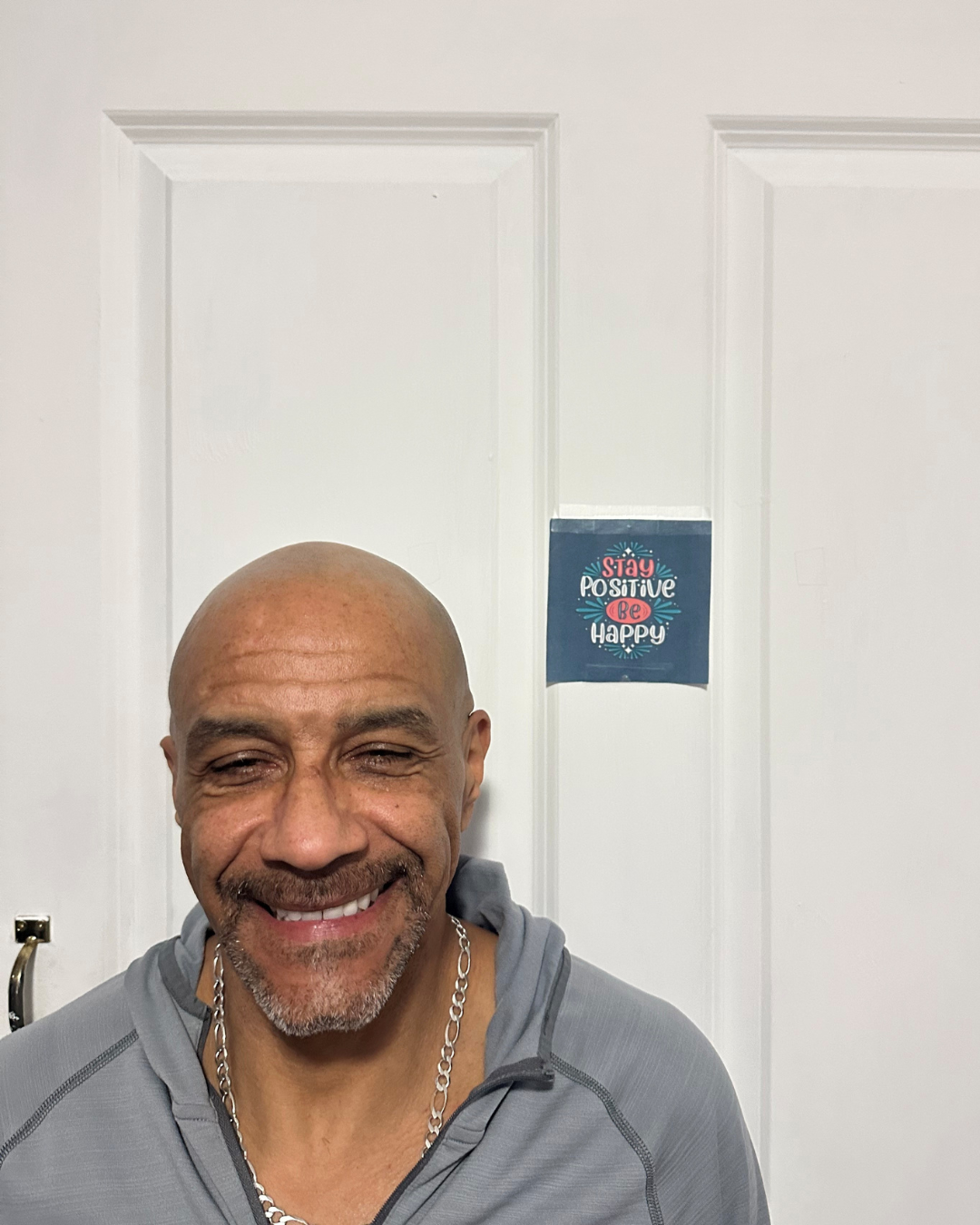
“Stay Positive. Be Happy.”
What was life like before you became unhoused?
I was born in 1967. My parents were both Cape Verdean and my dad was in his 50s when he was born, so I was by far the youngest in his giant family.
My mom died when I was six, and from then on my dad tried to pass me off to other family members, but I was a generation younger than even the kids of my aunts and uncles so I ended up getting bounced around in foster homes between Sacramento, California and Cape Cod. My sister, who later became my godmother, and then my parent after my biological parents died, was 20 years older than me. By the time I was 15, I was living with her, but I was already broken by then.
When did you become homeless, and how did it happen?
The worst mistake I ever made was when my brother-in-law (my sister‘s husband) told me to “follow the rules or get out” and I decided to leave. My life took a turn for the worst. I couch-surfed for a long time, selling drugs and drinking. I went down to Florida with some friends, tried to buy some weed, and got pulled over in somebody else’s car. There was a gun in the car. I got tagged with a gun charge for somebody else’s gun and ended up staying in a penitentiary in Daytona for a full year. After that I returned to the Cape and was out of trouble for a few years before going back to jail for five years. Ultimately, I was in jail three or four times on drug charges or OUIs.
How did you find housing? Who or what helped you the most?
At one time I had four OUIs in a row, so the judge forced me to go to Hope House and that was the best thing that ever happened to me. I really liked the staff there, I liked the people there, and something just clicked. I realized I was ready to change to do good, and to this day I still go back to volunteer at Hope House and serve as a mentor.
At Hope House, I was connected with doctors for the first time—I went from never going to the doctor to finally being able to get check ups and go to the dentist and have my teeth fixed. One day, I started feeling a pain in my chest; three days later, I was under the knife having a quadruple bypass. If I hadn’t gone into that program, I would be dead.
What are things like for you now?
I went from Hope House to another program that set me up with workforce development opportunities. They eventually got me a job at FedEx, a job I still have, working at Logan airport from 4:00-10:00am.
Commonwealth Land Trust came into my life at the perfect time and hooked me up. I think everything had to happen the way it did for me to have made it to CLT. I really like living in downtown Boston, and I love the CLT staff. I work three jobs to keep busy and have options. Life is going well.
What does the future hold? What is possible for you because you attained housing?
Since being housed, I got my GED. Now I’m going to UMass to become a licensed drug counselor - I’m almost done with classes.
My major focus now is staying active, and trying to give back. I care a lot about paying it forward and mentoring folks who are on the same journey at different spots. I go to 12 step meetings and talk to people outside, give them food, encouragement, anything that makes them feel like they’re still human, like they’re loved.
❄️❄️❄️